
I have spent years thinking about the user experience of grief. I have also spent some time worrying that writing about it would put me one sentence away from “What my stillbirth taught me about B2B sales.”
So, to establish a boundary: there will be no five actionable takeaways. My son is not a thought leadership opportunity.
His name is Owen.
I lost Owen one week before my due date. He was a full-grown baby. We were so close to bringing him home.
After I lost him, the digital world continued to expect him.
Pregnancy trackers kept sending reminders. Items from my registry were still being delivered. Then the alerts moved on from tracking my pregnancy to tracking my baby. The systems carried on telling me about the life of a baby who had died.
For months, those messages kept arriving.
I knew something they didn’t.
There is a particular cruelty in being addressed with cheerful certainty about a future that has disappeared. The reminders had been welcome once. I had signed up for them because I wanted that future, too. That was what made them hurt.
Somewhere, my life was still proceeding according to plan.
In July 2022, three months after Owen died, I took Megan Devine’s Writing Your Grief course alongside two dear friends. In one of those pieces, I wrote about the traces of him scattered through our home: a tube of pregnancy toothpaste, a bottle of Mylanta, a parking garage receipt from my last appointment.
There were digital traces, too. Target still counted “Baby” among my most-shopped categories. Amazon recommended crib sheets and teethers.
“There is no toggle in Settings for ‘My baby died’,” I wrote.
I wanted the recommendations to stop. I kept the empty toothpaste tube on the bathroom counter.
***
In user experience work, we talk about the “happy path”: the route through an experience when things go as intended. Someone finds what they need, understands what to do, and gets where they want to go.
I like making that path easier. I am interested in the unnecessary step, the confusing instruction, the thing we’ve asked someone to remember that we could have remembered for them. People have enough going on.
But there is no happy path through losing your baby. There isn’t supposed to be.
There is no successful completion screen. No reassuring little check mark. You cannot optimize your way into the version where he comes home.
I wasn’t expecting an app to know how to comfort me. I wanted it to stop sending me updates about the pregnancy and the baby I had lost.
Those are very different requests.
The pregnancy had ended. My relationship with Owen had not. There was no obvious place for that distinction in the systems still sending me reminders.
***
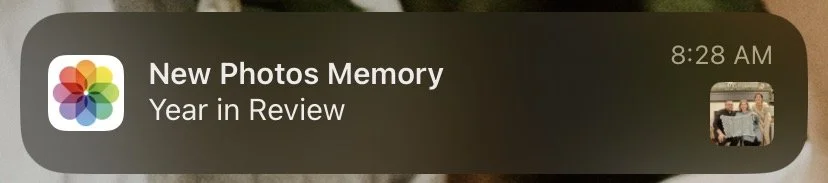
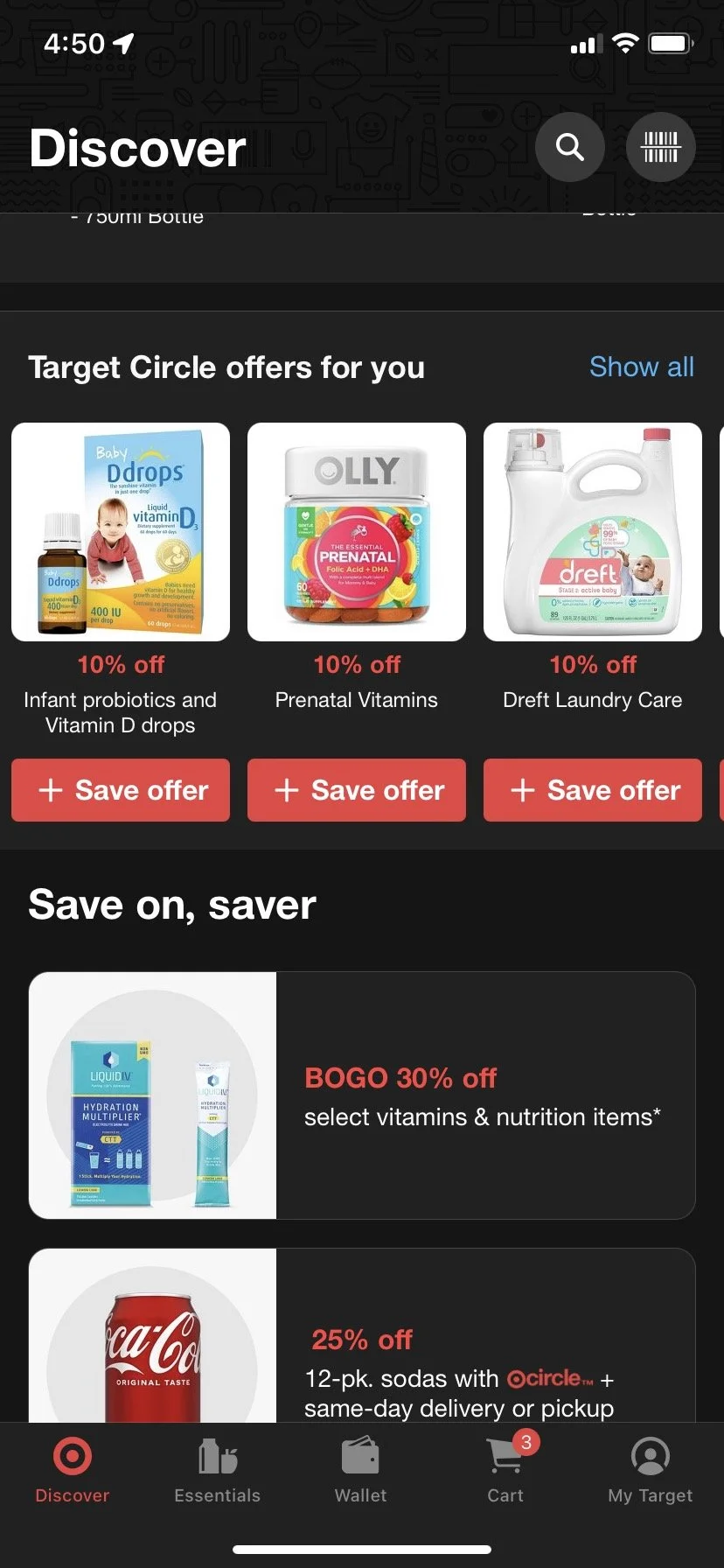
On December 27, 2022, I saved two screenshots in a note titled “Cruelty of Digital Memories.” One showed Target’s offers “for you”: infant vitamin drops, prenatal vitamins, baby laundry detergent. The other was a notification from Photos: “New Photos Memory. Year in Review.”
Years later, my phone still offers me “on this day.”
Sometimes there are pregnancy photographs. Sometimes ultrasound images of Owen.
Sometimes I am glad to see them.
Sometimes I am absolutely not prepared.
This is where I lose confidence in any beautifully straightforward proposal to “just turn those off.” I don’t want him erased. I don’t want every trace of that pregnancy treated as something harmful that needs to be removed for my protection.
I also don’t always want to encounter it unexpectedly while doing something entirely ordinary on my phone.
Both things are true. They can be true on the same day.
When I’m looking for photographs from around the time I lost him, I scroll as fast as I can. I’m trying to get to whatever I opened the app to find without looking too hard at what I have to pass along the way.
It is a strange gesture: moving quickly past photographs connected to someone you love because you love him, and looking might hurt more than you can manage at that moment.
A photo app can recognize a face, a place, a date. It cannot know whether I have room for a particular memory this afternoon.
To be fair, neither can I, until I see it.
***
I keep coming back to control.
After Owen died, my lack of control felt cosmic. There was nothing I could do to change what had happened. Having a say in when a photograph appeared on my phone was a very small thing. But it was a choice I could still have.
The toggle I imagined in 2022 could have stopped the sales messages. It could not have decided what to do with the photographs. Even then, I was keeping some traces of Owen and asking for relief from others.
Google Photos began rolling out Locked Folder on iPhone in August 2023, more than a year after Owen died. When I discovered it, I felt relief. Here was a way to give Owen’s photographs a place of their own, away from the everyday business of finding a picture on my phone. I could go to them deliberately, when I had time and space for whatever came with looking.
I don’t know whether bereaved parents were among the people its designers had in mind. But the choice it offered mattered to me. Loving those photographs doesn’t mean I am ready to see them every time I open an app.
I can imagine a gentler experience: a way to pause certain memories without deleting them, and to change my mind without having to explain myself.
I don’t have a perfect design to offer. I’m suspicious of how quickly we reach for one.
Even the word “reminder” becomes complicated here. I have not forgotten Owen. The photograph isn’t reminding me that he existed. It is bringing a particular part of loving and losing him into the foreground, at a time I didn’t choose.
Sometimes that feels like a gift.
Sometimes it feels like being caught off guard in a place I had thought was safe.
***
I’m writing about this on a website that also contains my work. That makes me conscious of the temptation to connect everything neatly: here is the loss, here is the lesson, here is the more empathetic professional who emerged.
Grief has deepened my empathy. It has changed what I notice and the assumptions I’m willing to make about someone else’s life.
I still resist making that into a return on investment.
I would rather have my son.
If I work with a team again, I want there to be room for this part of me. I don’t need every colleague to know every detail. I do want to be a person whose life can be acknowledged, rather than carefully avoided because no one knows quite what to say.
That wish extends to the things we build. We won’t always know what someone is carrying when they arrive. We can make it easier to leave, pause, decline, or come back later. We can be a little less certain about what a date or a photograph ought to mean to them.
I still love the idea of making things delightful and easy.
And sometimes I want to look at a photograph of my son.
I would like to be the one who decides when.
***
Author’s note: The quoted line first appeared in “No Tidy Boundaries,” written July 23, 2022, during Megan Devine’s Writing Your Grief course.
